
What Are the Days of Awe, and What Do They Mean for Christians?
 •21 Minutes
Every autumn, God’s biblical calendar invites us into a remarkable season of remembrance, repentance, rejoicing, and expectation.
The trumpet sounds. Hearts turn toward God and His people remember His faithfulness. We are reminded that the God who kept His promises in the past is still fulfilling His purposes today.
The fall appointed times, the Feast of Trumpets, the Day of Atonement, and the Feast of Tabernacles, carry deep significance for Israel. But they also reveal a beautiful picture of God’s plan of redemption through Jesus Christ and point toward promises still to come.
These aren’t merely ancient holidays to study from a distance. God called them His appointed times. When God sets the appointment, we should pay attention.
These Are God’s Appointed Times
When God introduced the biblical feasts to Moses, He used some very important words:
“These are the appointed feasts of the LORD that you shall proclaim as holy convocations; they are my appointed feasts” (Leviticus 23:2 ESV).
Notice what God called them: “The appointed feasts of the LORD.” They are His.
God established sacred times when His people were to stop their normal routines, turn their attention toward Him, remember His faithfulness, and honor Him.
But there’s another important phrase in this verse that we can easily read past: “Holy convocation.”
A holy convocation was much more than a religious gathering. It was a formal meeting between God and His people … a sacred appointment when they set aside their normal activities to gather before Him, hear His Word, worship, remember His faithfulness, and honor Him.
These weren’t simply dates Israel chose to commemorate important events. God established the times and invited His people to meet with Him.
That’s part of the significance behind the biblical concept of an appointed time. The Hebrew word moed carries the idea of an appointed time, meeting, or season.
Seen that way, the biblical feasts become much more than ceremonies on an ancient calendar. They are divine appointments.
The importance of an appointment is determined in large part by who made it.
Imagine receiving a personal invitation to meet with someone you deeply respect. They chose the day, they chose the time, and they specifically asked you to be there. You wouldn’t casually glance at your calendar and say, “I’ll see if I have anything better going on.”
You would protect that appointment.
Now consider God’s appointed times. The invitation didn’t originate with a religious organization, a rabbi, or a church leader.
God set the appointment.
He chose the time, and told His people to remember it throughout their generations.
When the King of kings sets the appointment, His people should want to be there.
That raises an important question for Christians today:
If God established these appointments and told His people to remember them throughout their generations, should we simply assume they no longer matter?
Or should God’s appointed times still command our attention even in 2026 and for generations to come?
Grafted into God’s Family
Paul gives us a beautiful picture in Romans 11. He describes God’s covenant people as an olive tree and Gentile believers as wild branches that have been grafted in, becoming “a sharer of the root and the fatness of the olive tree” (Romans 11:17 ESV).
Through Jesus Christ, we have been brought near.
We don’t honor God’s appointed times to earn salvation or earn a place at His table. We honor them because, through Christ, He has already given us a place at His table.
When we begin viewing God’s appointed times that way, they stop being someone else’s religious history. They become opportunities to remember God’s faithfulness, worship Him, honor Him with what He has placed in our hands, and look forward with expectation to promises still to come.
The Feast of Trumpets: Wake Up!
The fall appointed times begin with the Feast of Trumpets, commonly associated today with Rosh Hashanah, the Jewish New Year. God instructed His people:
“In the seventh month, on the first day of the month, you shall observe a day of solemn rest, a memorial proclaimed with blast of trumpets, a holy convocation” (Leviticus 23:24 ESV).
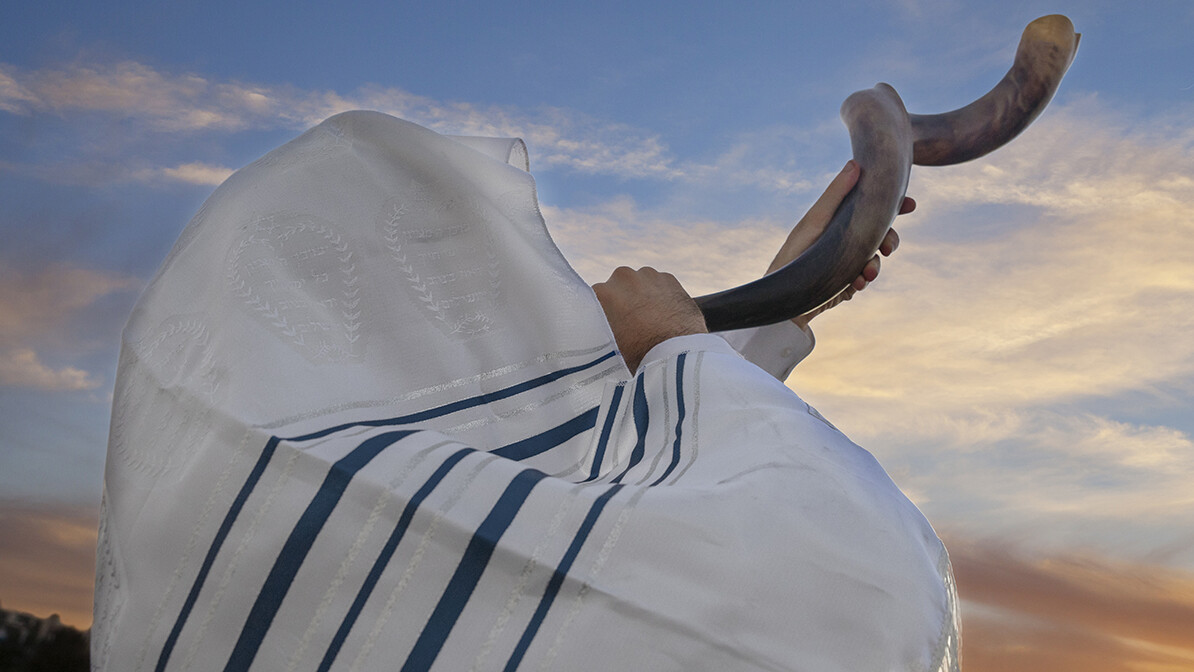
Imagine the piercing sound of the shofar breaking through the noise of everyday life. The trumpet called God’s people to stop, listen, remember, and prepare their hearts.
Perhaps you need to hear that trumpet in your spirit today.
Life becomes crowded with responsibilities, worries, deadlines, and distractions. Without realizing it, we can become so busy with life that we stop listening for the One who gave us life.
The trumpet calls: Wake up. Turn your heart toward God. Remember who He is.
For followers of Jesus, the trumpet also points our attention toward something still ahead.
“For the Lord himself will descend from heaven with a cry of command, with the voice of an archangel, and with the sound of the trumpet of God” (1 Thessalonians 4:16 ESV).
We don’t know the day or hour of Christ’s return. But we know this:
The King is coming.
The Days of Awe: Return to God
The Feast of Trumpets begins the ten-day period traditionally known as the Days of Awe, culminating in Yom Kippur, the Day of Atonement. For centuries, these days have been associated with examining one’s life, repentance, and turning toward God.
David prayed:
“Search me, O God, and know my heart! Try me and know my thoughts!” (Psalm 139:23 ESV).
That’s a courageous prayer. Lord, search me. Ask yourself: Is there …
- Something I need to surrender?
- Someone I need to forgive?
- An attitude that doesn’t honor You?
- An area where fear has replaced faith?
- Something You told me to do that I’ve delayed obeying?
Repentance isn’t God pushing us away. It’s an invitation to return to the One who loves us.
Yom Kippur: Jesus, Our Perfect Atonement
The Days of Awe culminate with Yom Kippur: the Day of Atonement.
Under the Old Covenant, this was the one day each year when the high priest entered the Most Holy Place to make atonement for the sins of the people. But those sacrifices had to be repeated year after year.
Then Jesus came. Hebrews tells us:
“He has appeared once for all at the end of the ages to put away sin by the sacrifice of himself” (Hebrews 9:26 ESV).
Once for all.
Jesus became our Great High Priest and the price has been paid. The way into God’s presence has been opened!
Yom Kippur points toward the breathtaking truth of the Gospel: Jesus took our sin upon Himself so we could be reconciled to God.
We don’t have to wonder whether the sacrifice was enough. Jesus declared from the cross: “It is finished” (John 19:30 ESV).
Sukkot: The Season of Our Joy
Five days after Yom Kippur comes Sukkot: the Feast of Tabernacles.
After repentance and atonement comes rejoicing. God instructed His people to live temporarily in booths, remembering how He cared for Israel during the wilderness journey.
They lived in temporary shelters. But God was with them.
They walked through a wilderness. But God provided for them.
They didn’t always know what tomorrow would bring. But God remained faithful.
Perhaps you’re walking through your own wilderness today. You may be waiting for provision, direction, restoration, or an answer to prayer.
Tabernacles reminds us: The wilderness does not mean God has abandoned you. The God who faithfully led His people then is still faithful today.
God Wants to Dwell With His People
At the heart of Tabernacles is one of the great themes running throughout Scripture: God desires to dwell with His people.
His presence accompanied Israel through the wilderness. His glory filled the Tabernacle and later the Temple. Then something astonishing happened:
“And the Word became flesh and dwelt among us” (John 1:14 ESV).
Jesus came. Immanuel: God with us.
After Jesus’ death, resurrection, and ascension, the Holy Spirit came to dwell within believers. And even that isn’t the end of the story. Revelation tells us:
“Behold, the dwelling place of God is with man. He will dwell with them, and they will be his people” (Revelation 21:3 ESV).
From Genesis to Revelation, God’s heart is unmistakable. He wants His people with Him.
Don’t Come Empty-Handed: A Command and a Promise
There is another remarkable dimension to God’s appointed times. God instructed:
“They shall not appear before the LORD empty-handed. Every man shall give as he is able, according to the blessing of the LORD your God that he has given you” (Deuteronomy 16:16–17 ESV).
The first sentence is a command: Don’t appear before the Lord empty-handed.
God called His people to honor Him with an offering. But don’t stop reading there.
Because the second sentence reveals something beautiful: There is a promise within the command.
Every person was to give “according to the blessing of the LORD your God that he has given you.” God wasn’t asking His people to manufacture something they didn’t possess.
He was the One who had put something into their hands in the first place.
The command was to bring an offering, but behind that command was the expectation of God’s provision: When the appointed time comes, I will have blessed you so there is something in your hand to bring before Me.
Notice, too, the grace within God’s instruction: “As he is able.”
One person might bring much. Another might bring little. This wasn’t about comparison. It was about honor. Each person could look at God’s provision and say: “Lord, You gave this to me. Now I honor You with a portion of what You first placed in my hands.”
That’s why giving at God’s appointed times is more than presenting an offering. It’s remembrance, worship. And faith in action.
We look backward and say, “God, You have blessed me.”
We look upward and say, “God, I honor You.”
We look forward and say, “God, I trust You for what comes next.”
God didn’t simply establish these appointments and tell His people to come empty-handed. He also surrounded His instructions with remarkable promises.
In Exodus 23:20–31, God promised His people His presence and guidance, protection from their enemies, provision of bread and water, healing, fruitfulness, long life, and victory.
What a picture of the heart of our Heavenly Father!
Our offering is our response of worship, gratitude, faith, and obedience to the God who has already blessed us. That’s why we can approach His appointed times expectantly, standing upon His Word and saying:
“Lord, I honor You. I remember Your faithfulness. I bring You my best. And I trust You with my future.”
The Feast of the Final Harvest
Tabernacles was also known as the Feast of Ingathering, celebrating the final harvest of the year, giving this appointed time extraordinary significance for followers of Jesus.
Jesus looked at the people around Him and told His disciples:
“The harvest is plentiful, but the laborers are few” (Matthew 9:37 ESV).
That harvest continues today. Around the world, people still need to hear that Jesus loves them, died for them, and offers forgiveness and eternal life.
Scripture gives us a glimpse of where this harvest is heading:
“A great multitude that no one could number, from every nation, from all tribes and peoples and languages” standing before God’s throne (Revelation 7:9 ESV).
That’s the harvest we are working toward. Every Gospel message shared, every prayer offered, every person who tells someone about Jesus, and every seed sown to help take the Good News to another life is our part of participating in God’s great harvest.
Don’t Miss Your Appointment
God’s fall appointed times invite us to look backward at His faithfulness, upward toward His presence, and forward toward His promises.
- Trumpets calls us to awaken.
- The Days of Awe call us to return to God.
- Atonement points us to Jesus, our Great High Priest.
- Tabernacles reminds us that God desires to dwell with His people.
- The offering gives us an opportunity to honor Him for what He has placed in our hands.
- The harvest reminds us that our mission isn’t finished.
These aren’t merely interesting dates on an ancient calendar. The King set the appointments. Jesus came the first time as the Lamb who gave His life for our sins.
He is coming again as King.
Until then, may we live awake, walk in His presence, honor Him with what He has placed in our hands, help bring in a harvest of souls for His Kingdom, and faithfully tell the world that Jesus saves.
Honor God at His Appointed Time
As God’s appointed time approaches, prayerfully ask Him what He would have you place in His hands. Your Seed of Honor helps take the Gospel of Jesus Christ to people around the world, giving someone else the opportunity to hear the Good News and become part of God’s eternal harvest.
Have You Met the Messiah?
The appointed feasts reveal an extraordinary story of redemption. But knowing about Jesus isn’t the same as knowing Him.
Jesus gave His life so your sins could be forgiven and you could know God personally.
Frequently Asked Questions
Is “Days of Awe” a term found in the Bible?
Scripture never uses the phrase “Days of Awe.” Leviticus 23 calls the Feast of Trumpets and the Day of Atonement God’s appointed feasts and holy convocations, but it doesn’t name the ten days between them as a set. That name, Yamim Noraim, comes from later Jewish tradition. The label is traditional rather than biblical, but the appointed times themselves, and their call to repentance and readiness before God, are rooted in Scripture.
Is the Feast of Trumpets the same thing as Rosh Hashanah?
They fall on the same day, but the names come from different eras. Leviticus 23:24 describes this appointed time as a memorial proclaimed with blast of trumpets (ESV), which is why it is called the Feast of Trumpets. “Rosh Hashanah,” meaning “head of the year,” is the later, traditional Jewish name that developed as the day also came to mark the civil new year.
Are Christians required to observe the Days of Awe?
Paul told believers, “Let no one pass judgment on you… with regard to a festival… These are a shadow of the things to come, but the substance belongs to Christ” (Colossians 2:16–17 ESV). Christians are not bound to keep the biblical feasts as a legal requirement. Many still find deep meaning in marking them, not out of obligation, but as a way to remember what God has done and to look forward to what Christ will complete.
How can Christians observe the Days of Awe today?
This can look different from household to household. Some ideas: setting aside time for honest self-examination and confession, in the spirit of Psalm 139:23; fasting or quieting your schedule around Yom Kippur; gathering with other believers to worship and hear God’s Word; and marking the season with a meaningful gift or offering. What matters most is not a particular ritual. It’s a heart turned toward God.
Trending Now
Sign up today for your Inspiration Today Daily Newsletter
Supercharge your faith and ignite your spirit. Find hope in God’s word. Receive your Inspiration Today newsletter now!


Related Articles

Tabernacles: Your Appointed Time for Breakthrough
As we celebrate the Feast of Tabernacles, I'm praying for you to experience a season of…
Feast of Tabernacles: Meaning, Harvest, and Christ’s Return
Every fall, the biblical calendar brings us to one of the most joyful celebrations in Scripture:…

Yom Kippur and Jesus: How the Day of Atonement Points to the Cross
Long before Jesus carried the cross to Calvary, God gave His people a vivid picture of what…
What Is Yom Kippur?: The Day of Atonement and What It Means for Christians
Yom Kippur, the Day of Atonement, is one of the most solemn and sacred days on the biblical…
Next Steps To Strengthen Your Walk
Inspiration Today Newsletter
Supercharge your faith and ignite your spirit. Find hope in God’s word. Receive your Inspiration Today newsletter now!
Christian Articles
Find articles to strengthen your walk and grow your faith. We have a wide range of topics and authors for you.
Submit A Prayer Request
We are here for you. Simply click on the button below to reach us by form, email or phone. Together we will lift our hearts and voices with you in prayer.